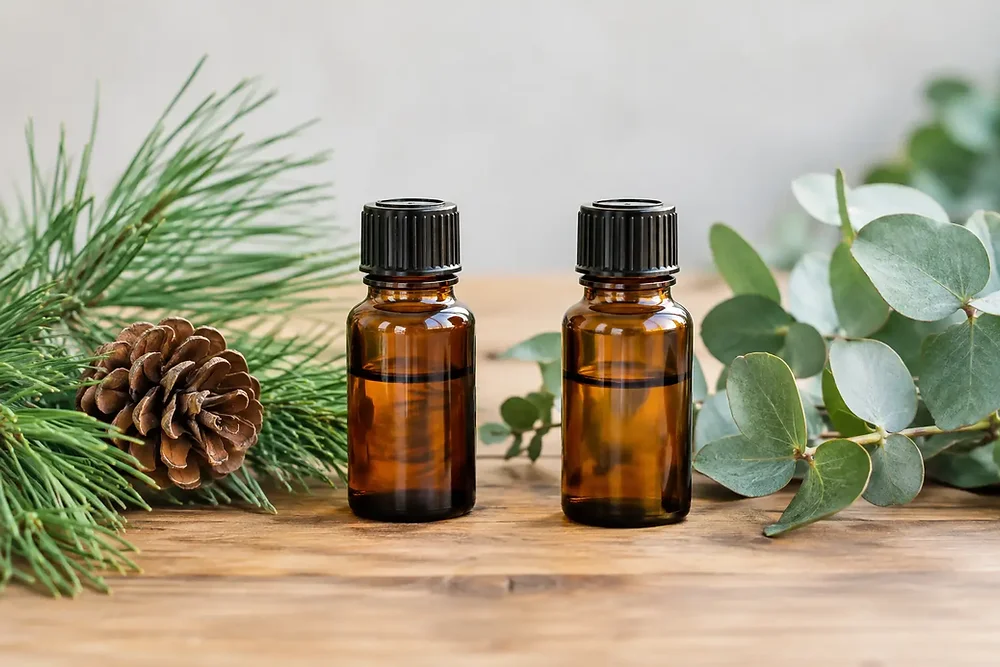
A steaming shower can become a small forest ritual with just a few aromatic drops. Yet pine oil versus eucalyptus is not simply a choice between two fresh scents. One feels resinous, green, and quietly grounding; the other is brighter, cooler, and more immediately clarifying. Knowing the difference helps you choose an oil that serves the moment, rather than reaching for the same bottle every time.
Both oils belong beautifully in a natural home and body-care practice, especially when selected with care and used respectfully. Their character, intensity, and best applications differ enough to make each one worth knowing on its own terms.
Pine Oil Versus Eucalyptus: The Essential Difference
Pine essential oil is distilled from the needles, twigs, or sometimes cones of pine trees. Its aroma often carries the feeling of crushed needles, dry bark, resin, and cool mountain air. Depending on the species, it may be soft and balsamic or sharp and bracing. Pine is often associated with alpha-pinene, an aromatic compound that contributes to its distinctly coniferous profile.
Eucalyptus essential oil is commonly steam-distilled from eucalyptus leaves. Many varieties have a crisp, camphoraceous scent led by eucalyptol, also called 1,8-cineole. It can feel almost icy in the air, which is why people so often reach for it in shower rituals, during stuffy seasons, or when they want their space to feel freshly cleared.
The practical distinction is sensory. Pine creates a deeper, wooded atmosphere, while eucalyptus creates a cleaner, more cooling impression. Neither is universally better. The right choice depends on whether your ritual calls for restoration, refreshment, or a balance of both.
Choose Pine When You Want to Feel Rooted
Pine oil has a certain stillness to it. Its scent is not only fresh – it is textured. There is wood, resin, earth, and the memory of sun-warmed forest paths. For an evening bath, a post-shower body ritual, or a diffuser blend meant to make a busy home feel calmer, pine is often the more enveloping choice.
It can also bring a naturally outdoorsy quality to home care. A properly diluted pine blend can make a simple cleaning ritual feel more considered, replacing overly perfumed products with an aroma that feels closer to the land. For those drawn to Mediterranean botanicals, pine carries a familiar regional strength: hardy, aromatic, and shaped by sun, stone, and resilience.
Pine is especially fitting when your senses feel overextended. It does not need to dominate a room to be present. Diffuse it lightly while reading, stretching, folding laundry, or taking a quiet pause after work. In a personal inhalation ritual, one drop on a tissue can offer a gentler alternative to filling the whole room with scent.
Because “pine oil” can refer to different pine species and different types of aromatic material, quality and labeling matter. Look for a clearly identified botanical source and an essential oil intended for aromatic use. Avoid treating household pine oils, fragrance oils, or products labeled only as pine scent as interchangeable with a pure essential oil.
Choose Eucalyptus When You Want a Clearer Atmosphere
Eucalyptus is more direct. Its brisk, penetrating aroma has a way of changing the perceived temperature of a room, even when the air itself has not changed. A few drops in a shower-steam ritual or diffuser can make a morning routine feel cleaner and more awake.
This makes eucalyptus a natural companion during seasonal transitions, after travel, or on days when a closed-up home needs an aromatic reset. It is also a classic choice for gym bags, bathroom rituals, and linen refreshers, provided it is diluted appropriately and used on materials that tolerate essential oils.
There is a trade-off. Eucalyptus can be intense, particularly in compact spaces or for people who are sensitive to strong aromas. If its cooling edge feels too sharp on its own, soften it with a gentler citrus, lavender, or a restrained amount of pine. The goal is not to create the strongest possible scent. It is to create a ritual that feels good to return to.
Not all eucalyptus oils smell exactly alike. Eucalyptus radiata is often perceived as softer and sweeter, while eucalyptus globulus can be more forceful and traditionally camphoraceous. Reading the botanical name gives you a better sense of what to expect than relying on a front-label description alone.
How to Use Each Oil in a Daily Ritual
For a diffuser, begin modestly. In a standard ultrasonic diffuser, two to four drops is often enough, especially with eucalyptus. Try pine alone for a wooded, meditative setting, or blend two drops of pine with one drop of eucalyptus for a forest-after-rain effect. Let the fragrance remain an accent, not a cloud.
For a shower ritual, place one or two drops on the far edge of the shower floor, away from direct skin contact and standing water. As the steam rises, the scent will lift around you. Pine creates a slower, spa-like mood; eucalyptus can make a morning shower feel more invigorating. Never apply undiluted essential oil directly to wet skin in the shower.
For body care, dilution is essential. Add essential oil to a plain, skin-safe carrier oil or unscented body product rather than using it neat. A conservative starting point for most adults is about one drop of essential oil per teaspoon of carrier oil for a small, occasional application. Pine may suit a massage ritual after a long day, while eucalyptus is often better saved for aromatic use because its scent can feel stronger on the skin.
A warm foot soak can be another gentle option, but essential oils should first be dispersed in a carrier such as a teaspoon of body oil, unscented bath gel, or a solubilizing bath product. Dropping oil directly into water leaves concentrated droplets floating on the surface, which can irritate skin.
Purity Is Part of the Experience
A beautiful essential oil begins long before the bottle is opened. The plant variety, growing conditions, harvest timing, distillation method, and storage all shape the finished aroma. Oils that are carelessly diluted, fragranced, or poorly stored can smell flat, harsh, or strangely sweet – and they do not offer the same honest connection to the plant.
For a brand such as PALINOVA, botanical provenance is more than a detail on a label. It is part of the ritual itself. Palestinian landscapes have long cultivated an intimate relationship with aromatic plants: knowledge carried through harvests, home remedies, food traditions, and care passed between generations. Choosing a pure oil with a traceable story brings more integrity to your shelf and more meaning to every use.
Keep essential oils tightly capped, away from heat and direct sunlight. Citrus oils tend to change more quickly, but pine and eucalyptus also deserve cool, dark storage. When an oil’s aroma becomes noticeably dull, sour, or unfamiliar, it is time to replace it.
Use Both Oils With Care
Natural does not mean risk-free. Essential oils are concentrated plant materials, and pine and eucalyptus both deserve measured use. Patch test any diluted topical blend on a small area of skin first, and stop using it if redness, burning, or discomfort occurs.
Do not ingest essential oils unless you are under the specific guidance of a qualified clinical professional. Keep bottles out of reach of children and pets, and use extra caution with eucalyptus around young children due to its high aromatic intensity. If you are pregnant, nursing, managing asthma, epilepsy, allergies, or a medical condition, ask a qualified healthcare professional before using essential oils. In homes with pets, diffuse lightly in a well-ventilated room and make sure animals can leave the space.
Let the season and your own senses guide the choice. Reach for pine when you want to feel held by the quiet strength of the trees. Choose eucalyptus when you want a brighter breath of air in your ritual. Some days call for one, some for the other, and some for a carefully balanced blend that carries the spirit of resilience in every drop.